Grease Trap Cleaning
Full service down to the walls, baffles, and outlet tee.
Learn more about Grease Trap Cleaning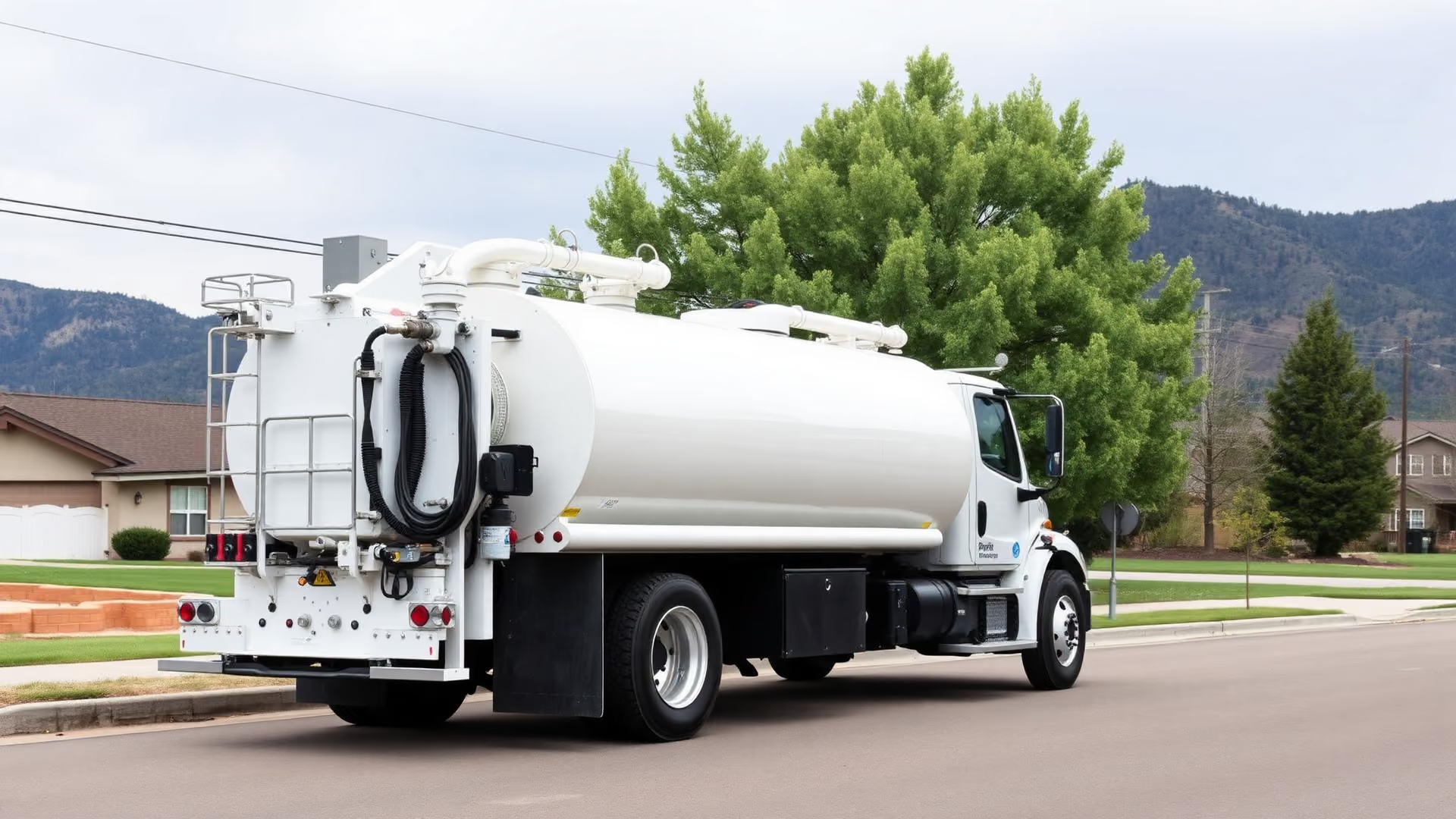
Grease trap installation means selecting an interceptor sized to the kitchen's actual flow, placing it where it can be served without shutting the line down, and setting it so the inlet, outlet, and baffles work the way the design intends. An undersized or badly placed trap costs money every month for the life of the building. Affordable Septic Pumping installs and replaces interceptors for Denver and Front Range kitchens. Call 720-427-7557.
The situation
Four situations. A new build or a first time buildout that has no interceptor yet. A concept change where the kitchen now runs a much heavier grease load than the existing unit was sized for. A unit that has been ignored long enough that hardened deposits no longer respond to cleaning. Or a trap with failed baffles and a compromised shell where repair costs approach replacement.
The undersizing case is the one that quietly bleeds money. A trap that is too small for the flow needs service constantly, and even on that schedule it never gives the wastewater enough residence time to separate properly, so grease keeps reaching the line anyway. You end up paying for frequent service and still having the problem it was supposed to prevent.
The concept change case surprises people. Adding a fryer bank, moving from a sandwich program to a full saute line, or extending into breakfast service changes the grease load substantially without changing the seat count. If your service interval keeps shortening, that is the system telling you the unit no longer matches the kitchen.
If your building is on an onsite septic system rather than city sewer, getting this right matters more, because grease that escapes goes into a drain field. Commercial and restaurant septic covers that combination.
How the job runs
Every fixture that will discharge to the trap gets listed with its flow. Three compartment sinks, prep sinks, mop sinks, dish machines, wok stations, and floor drains all contribute, and the total is what sizing is built from.
Flow rate and required retention determine capacity. Menu weight informs whether to size at the minimum or above it, and going a step up is usually the cheaper decision over the life of the kitchen.
Small units go under sink or nearby indoors. Larger interceptors go in ground outside. The deciding factor should be service access, because a trap that is awkward to reach is a trap that gets serviced late.
Sizing standards, permitting, and inspection requirements are set locally and they differ across the metro. This gets confirmed with your health department and plumbing authority before anything is ordered.
For an in ground interceptor that means excavation, base preparation, and setting the unit level. Level matters here the same way it does on a septic tank. A unit set out of level never separates the way it was designed to.
The inlet, the outlet, the baffles, and the venting all have to be right for separation to work. This is where a cheap installation shows up later as a trap that never performs.
The authority inspects where required, the unit is filled and checked, access covers are set to grade, and you get the capacity documented along with a starting service interval.
Not the space available, and not the price. These are the inputs that actually decide it.
Placement is the decision that owners regret most often, because it sets your service cost for the life of the building. A unit tucked behind fixed equipment, under a permanent workstation, or in a spot the truck cannot reach means every service visit takes longer and costs more, and eventually it means service gets deferred.
In ground exterior interceptors generally serve larger kitchens better. They keep the volume and the odor out of the workspace, they can be serviced with far less disruption, and they scale to capacities that simply do not fit indoors. The tradeoff is excavation and the need for access covers set properly to grade.
Small under sink units make sense for light load operations and tight buildouts, but they fill quickly and they sit in the middle of the work area. Be honest about your grease load before choosing one, because a unit that needs constant service is a daily operational annoyance rather than a background utility.
Undersized units never achieve the retention time separation depends on, so grease reaches the sewer lateral even with a diligent service schedule. That is a compliance exposure and a blocked line waiting to happen, and no amount of service fixes a capacity problem.
Units set out of level separate unevenly and hold less usable volume than their rating suggests. Incorrect inlet or outlet configuration short circuits flow straight across the chamber. Missing or wrong baffles remove the mechanism entirely, and we find that on more existing traps than owners expect.
Poor placement produces the slowest failure of all, because the unit works fine and simply gets serviced less and less often until it does not. Grease trap pumping and cleaning are only effective if they actually happen on schedule, and access is the biggest predictor of whether they do.
Interior kitchen plumbing beyond the connection to the interceptor is a separate trade, and our sister company Afford-A-Rooter Plumbing handles that lane. Permit fees, plan review fees, and any engineering required by your local authority are passed through rather than marked up, and they are not part of a quote until the authority has told us what applies. Finish work, flooring restoration, and hardscape or landscape restoration beyond backfilling and grading the work area are outside our scope. We also do not certify compliance on your behalf. We build to what the authority requires and they inspect it.
Why us
What it costs
Unit capacity and type, whether it is an indoor under sink installation or an in ground exterior interceptor, excavation depth and soil conditions, how far the plumbing has to run to reach it, equipment access to the work area, whether existing equipment or finishes have to be worked around, and the permit, plan review, and inspection fees your authority charges. Replacing a small under sink unit and setting a large in ground interceptor in a working parking lot are not comparable projects, so we price after the site visit rather than posting a number that would mislead you in either direction. Call 720-427-7557 with your fixture list, your menu, and the building situation.
Questions
Keep going
Full service down to the walls, baffles, and outlet tee.
Learn more about Grease Trap CleaningScheduled evacuation that keeps you under the 25 percent line.
Learn more about Grease Trap PumpingScheduled intervals, documentation, and after hours visits.
Learn more about Restaurant Grease Trap ServiceGuides on sizing, service frequency, and keeping grease out of the line.
Family Owned & Operated. Call 720-427-7557 and tell us your trap size and your service hours.