Grease Trap Cleaning
Full service down to the walls, baffles, and outlet tee.
Learn more about Grease Trap Cleaning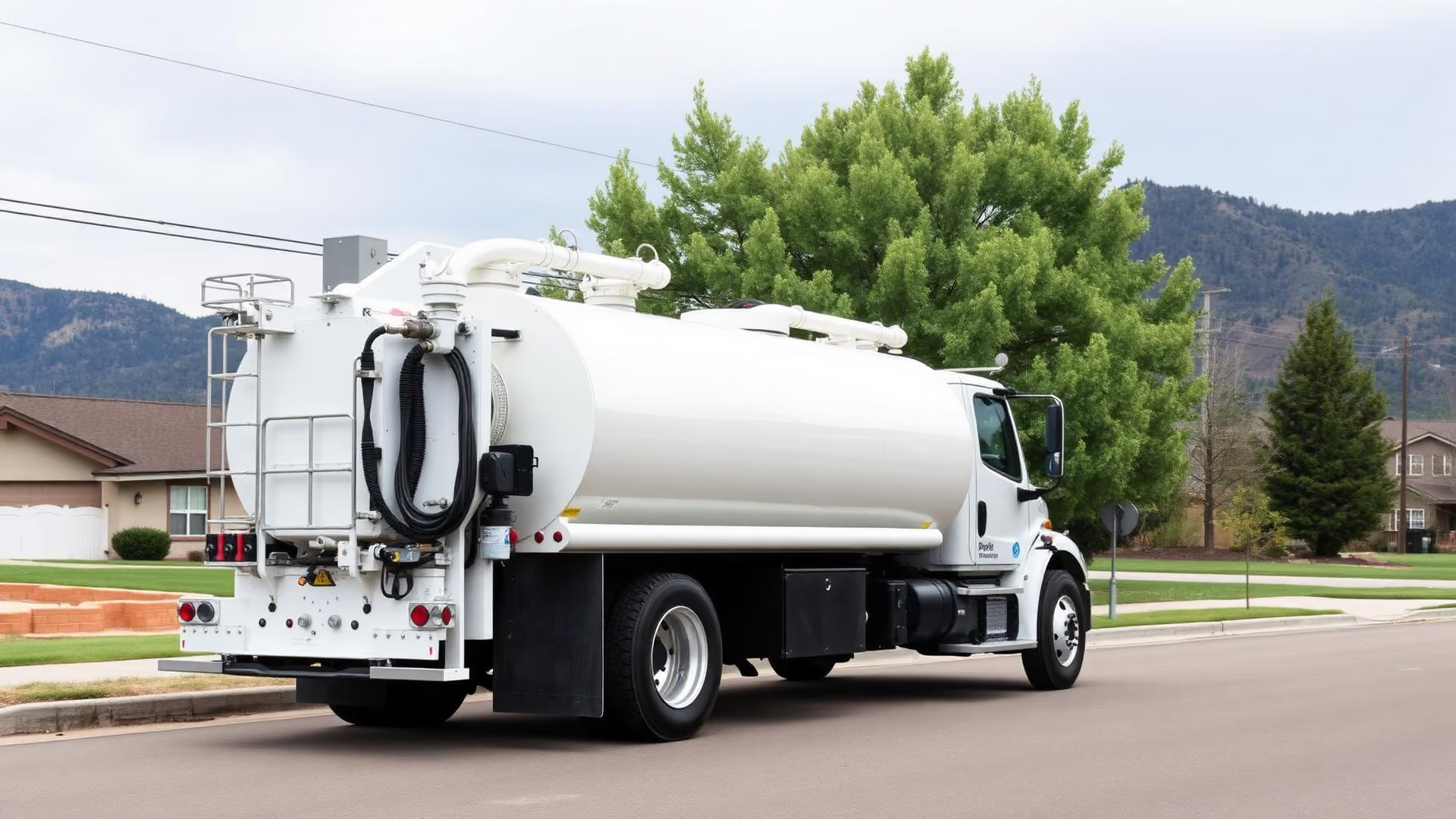
Grease trap pumping is the scheduled evacuation that keeps accumulated fats, oils, grease, and solids from passing the 25 percent line where a trap stops separating properly. The truck pulls the contents, the waste is hauled to an approved disposal site, and you get documentation for the visit. Cleaning goes further and takes the trap down to the walls and baffles. We serve restaurants and commercial kitchens across Denver and the Colorado Front Range.
Grease trap pumping Grease trap pumping is the removal of the accumulated grease layer, the liquid, and the settled solids from an interceptor with a vacuum truck. It empties the trap without the full scraping of the interior surfaces.
Pumping on a set schedule is what stops a trap from filling to the outlet and sending grease downstream.
The situation
A grease trap separates by slowing wastewater down. Fats float, solids settle, and clean water leaves through the middle. As the top and bottom layers grow, that clear middle zone shrinks and less of the trap is doing any separating.
The working standard local authorities lean on is the 25 percent rule: service the trap before combined grease and solids reach a quarter of its total capacity. Past that point, grease starts riding out into the sewer line, and the result is odors at the dish pit, slow floor drains, and a backup during your busiest service.
Two kitchens on the same block can be on completely different schedules. A small under sink trap in a fryer heavy kitchen can hit the line in weeks. A large in ground interceptor behind a cafe can go months. Trap size and grease load have to be read together, which is why we set your interval from what we actually pull out rather than from a default number.
How the job runs
We schedule so the truck is not in the way during a rush. Early morning, late night, and closed days all work.
We open the trap and note how full it was before anything comes out. That reading is what tunes your next interval.
Floating grease, wastewater, and settled solids are pumped into the truck.
We look at the baffle, the outlet side, and the lid seal while the trap is open, and flag anything that is failing.
Grease waste goes to an approved disposal site. It cannot go into a dumpster, a floor drain, or the sewer.
You get a record of the date, the volume removed, and who performed the work, so the file is there when someone asks for it.
Why us
What it costs
Cost tracks trap size, how much material comes out, access difficulty, and whether the visit is inside or outside normal hours. A small under sink trap and a large in ground interceptor are different jobs. Call 720-427-7557 with your trap size and your service hours and we will quote the visit and a realistic interval before we schedule anything.
Questions
Keep going
Full service down to the walls, baffles, and outlet tee.
Learn more about Grease Trap CleaningScheduled intervals, documentation, and after hours visits.
Learn more about Restaurant Grease Trap ServiceCleaning, pumping, and installation for Front Range kitchens.
Learn more about All Grease Trap ServicesFamily Owned & Operated. Call 720-427-7557 and tell us your trap size and your hours.