Septic Tank Pumping
Routine pump outs on a schedule that fits your household size.
Learn more about Septic Tank Pumping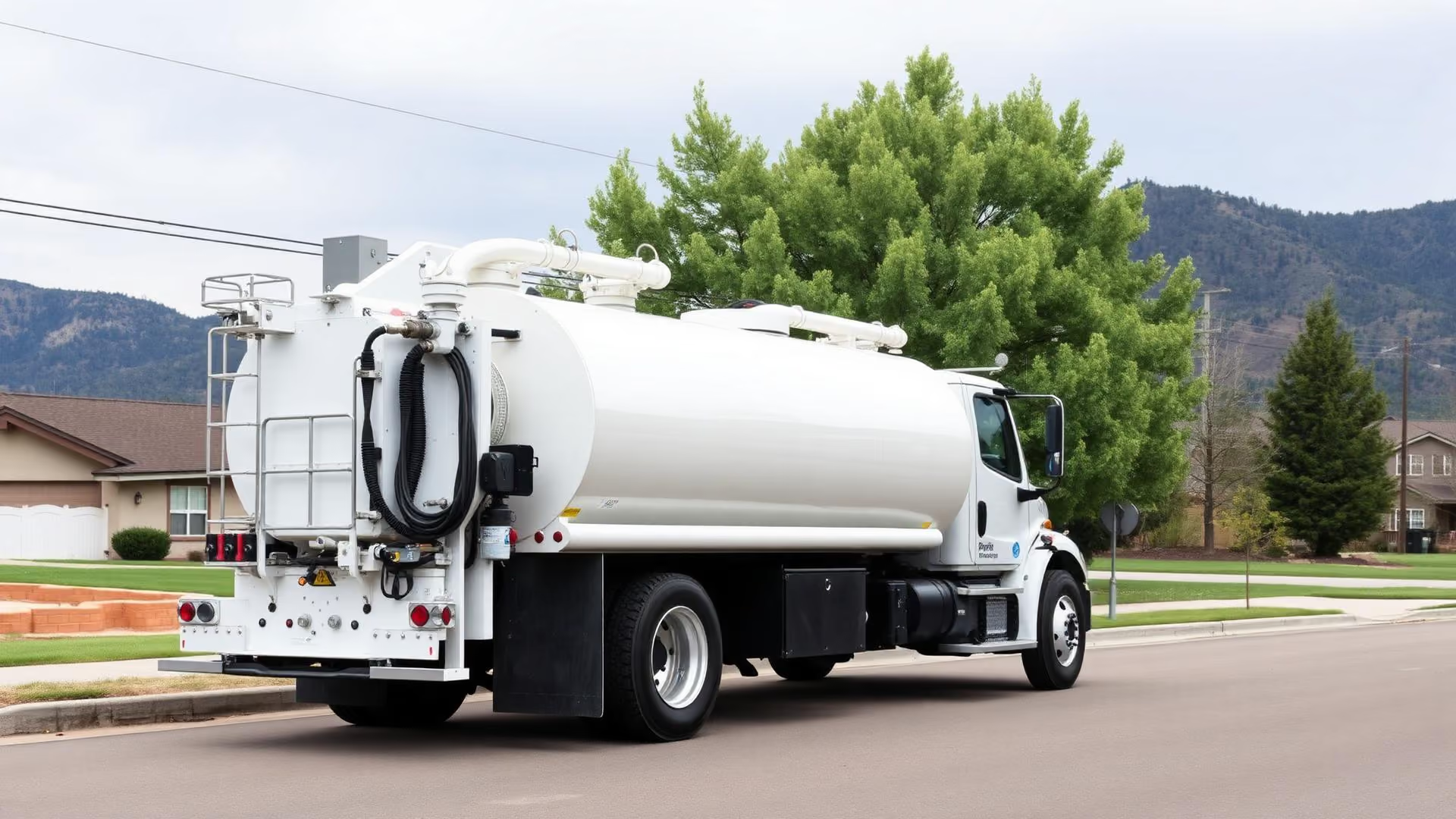
Septic service covers the full life of an onsite wastewater system: routine pumping to remove solids, inspection to document condition, repair when a component fails, installation when a system reaches end of life, locating when nobody knows where the tank is, and emergency response when waste stops moving. Affordable Septic Pumping does all of it across Denver and the Colorado Front Range. Call 720-427-7557.
The situation
Most people call knowing the symptom but not the service. Here is the fastest way to sort it. If nothing is wrong and it has been a few years, you need septic tank pumping. If the tank is badly behind schedule or heading into a sale, you need septic tank cleaning, which adds a wash down of the interior.
If a property is selling, a lender is asking, or a county wants a use permit, you need a septic tank inspection with a written report. If a component has failed or a symptom will not go away, you need septic system repair. If the system has reached end of life or the parcel has never had one, you need septic system installation.
If nobody can find the tank, or the cause of a symptom is genuinely unclear, start with locating and troubleshooting. And if waste is coming into the building or surfacing in the yard right now, go straight to emergency septic service and call 720-427-7557.
Not sure? Describe what you are seeing on the phone. Half the value of over 20 years on Front Range systems is being able to tell you which of these you need before anybody drives out.
How the job runs
Sludge depth measured at each visit sets the next date. That is what keeps solids inside the tank instead of migrating out into the drain field where they cause permanent damage.
[The effluent filter](/effluent-filter) is a cheap part that prevents an expensive failure, and it clogs quietly. It gets pulled and washed on every pump out we do.
[Risers and lids](/septic-tank-risers-and-lids) remove the digging charge from every future visit and make it far more likely the system actually gets serviced when it should.
No vehicles, no structures, no deep rooted trees, and no downspouts or irrigation directing water onto it. Compaction and saturation are the two ways homeowners damage a working field.
Wipes, grease, hygiene products, paint, and harsh chemicals all shorten system life. [What not to flush into a septic system](/what-not-to-flush-septic-system) is the short version worth taping inside a cabinet.
Slow drains, gurgling, odor outside, or a soft spot over the field are early warnings. Every one of them is cheaper to address before it becomes a backup.
Service dates, sludge measurements, the as built drawing, and the county permit. It saves money on every future visit and it is worth real money at sale time.
A system serving a full time family of five behaves nothing like one serving a cabin used eight weekends a year, and the service plan should not be identical either.
Onsite wastewater systems in Colorado are permitted and regulated at the county level. That means installation requirements, repair permitting, and whether an inspection and use permit are required when a property changes hands all depend on where the parcel sits, not on a single statewide rule.
We keep a page for each county we work in most: Adams, Arapahoe, Douglas, Jefferson, Elbert, Weld, Clear Creek, and Park. The septic permits hub is the starting point.
Always confirm the current requirement with the county health department for the specific parcel address before relying on any summary, ours included. Requirements and forms change, and the county is the authority.
The failure sequence is predictable. Solids build past the settling capacity of the tank, then start leaving with the effluent. Those solids enter the drain field and clog the soil pore space that was supposed to be treating clean liquid. Once that soil is clogged, it does not recover, and the system needs a new field.
That is the whole economic argument for maintenance. Pumping is a routine service. Drain field replacement is excavation, permitting, and county inspection. The gap between those two numbers is what a pumping schedule buys you.
The intermediate warnings are worth knowing so you catch it in the cheap phase: slow drains through the whole house, a high water level in the tank, sewage smell in the yard, and a wet spot over the leach field.
We work on the onsite wastewater system: the line from the building to the tank, the tank and its components, and the drain field. Interior house plumbing, fixtures, and clogs inside the building are handled by our sister company Afford-A-Rooter Plumbing. Excavation scale main sewer, water, storm, and fire line work is handled by our sister company Denver Sewer and Water. We do not sell septic additives, because none of them restore a clogged drain field and we are not going to imply otherwise. And we do not perform interior sewage remediation after a backup, though we will stop the source that caused it.
Why us
What it costs
Every service on this page prices from the same handful of variables: tank size, how accessible the access lids are, whether risers are installed, the actual condition of the system, drive distance to the property, and for permitted work, the county fees that apply. That is why you will not find a flat rate card here. A published number would be padded on the easy jobs and short on the hard ones, and neither serves you. Call 720-427-7557, tell us the property and the situation, and you get a real quote before a truck leaves the yard. Our septic service cost page explains the variables for each service.
Questions
Keep going
Routine pump outs on a schedule that fits your household size.
Learn more about Septic Tank PumpingFull system inspection for buyers, sellers, agents, and lenders.
Learn more about Septic Tank InspectionBaffles, filters, risers, lines, and drain field problems.
Learn more about Septic System RepairNew systems and full replacements, permit to final inspection.
Learn more about Septic System InstallationFind a buried tank and trace a symptom back to its real cause.
Learn more about Locating and TroubleshootingBackups, overflows, and failures that cannot wait for an opening.
Learn more about Emergency Septic ServicePractical answers on schedules, warning signs, and what service day looks like.
Family Owned & Operated. Call 720-427-7557 or send the form and we will get back to you with a straight answer.