Grease Trap Cleaning
Full service down to the walls, baffles, and outlet tee.
Learn more about Grease Trap Cleaning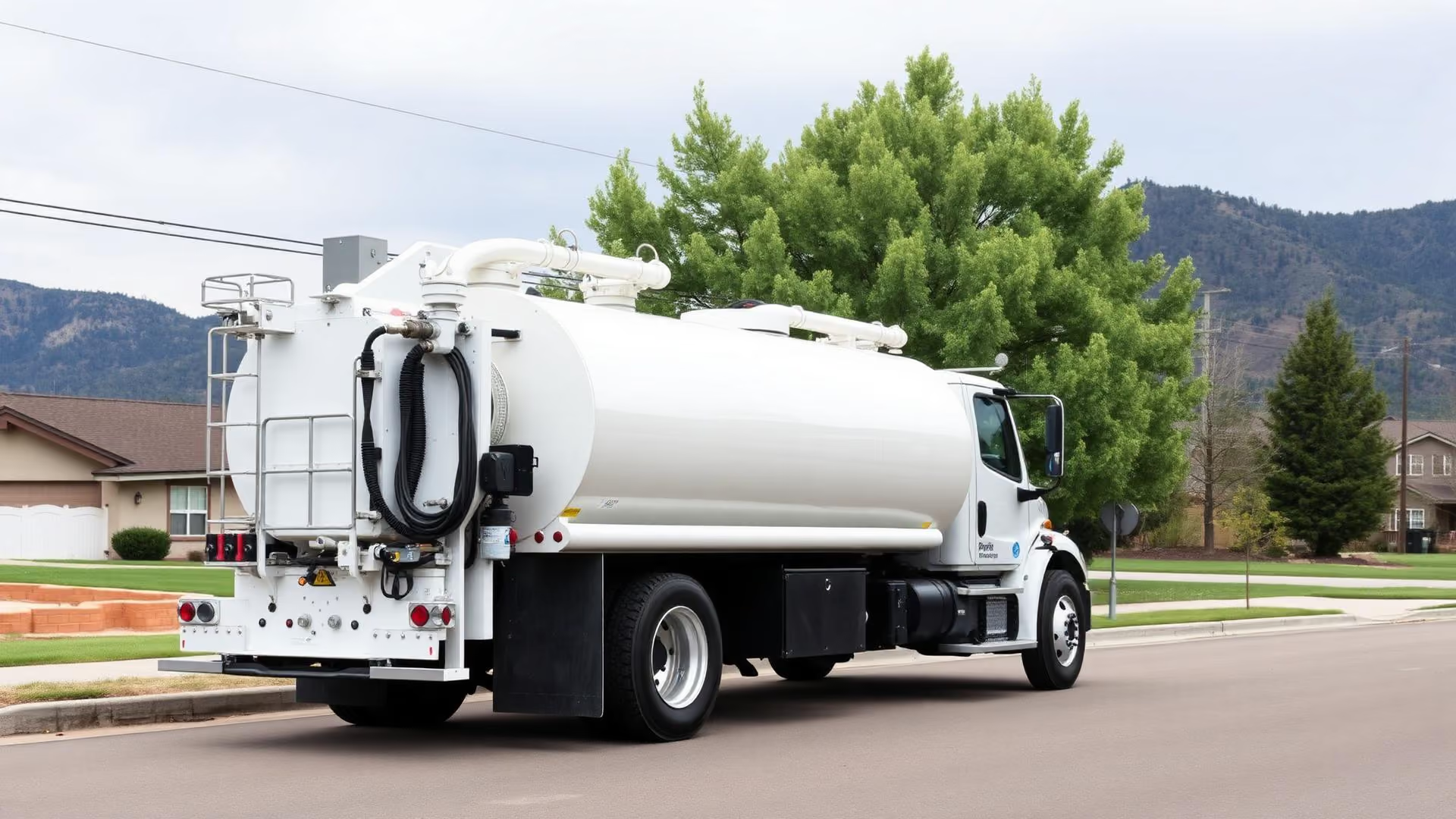
A grease trap, also called a grease interceptor, slows kitchen wastewater down so fats, oils, and grease float and settle out before the water reaches the sewer. It only works while it has room. Grease trap service is the scheduled cleaning, pumping, and documentation that keeps that room available. Affordable Septic Pumping serves restaurants and commercial kitchens across Denver and the Colorado Front Range. Call 720-427-7557.
The situation
Because they fill. A grease trap separates by giving wastewater time to sit so grease can rise and solids can sink. Every service cycle, the grease cap on top gets thicker and the solids layer on the bottom gets deeper, and the clear zone between them where separation actually happens gets narrower. Past a point, water moves straight through and carries grease out with it.
What you see in the kitchen when that happens is predictable. Drains slow at the three compartment sink and the floor drains, odor comes up when the kitchen is quiet, and eventually the trap backs up onto the floor during a rush. What the sewer authority sees is grease in the line, and that is the conversation nobody wants to have.
The 25 percent rule exists to catch it before either happens. Once the combined grease and solids reach roughly a quarter of the trap's liquid capacity, the separation zone is compromised. How often a Denver restaurant should clean its grease trap explains how that translates into a real interval for your operation.
Menu drives the rate more than seat count does. A fryer heavy kitchen, a breakfast operation running bacon and sausage all morning, or a butchery program loads a trap far faster than a salad and sandwich concept with the same covers.
How the job runs
Service happens before open, after close, or on a dark day. Nothing about this job belongs in the middle of a lunch rush.
Lid off, and we measure the grease cap and the solids layer against the trap's liquid capacity. That measurement is what proves whether the current interval is right.
Grease cap, wastewater, and settled solids all come out. Partial skimming of the top layer leaves the solids behind and shortens the next cycle badly.
Hardened grease clings to every interior surface, and it is not removed by suction alone. This is the step that separates a real cleaning from a quick pump.
Baffles, the outlet tee, the inlet, the lid, and the gasket. Missing or damaged baffles are common in older traps and they defeat the whole separation principle.
Contents go to an approved facility. This is the part that carries the liability, and it is not something to be casual about.
You get the service record for your compliance file. When an inspector asks, the paperwork is what answers, not your memory of when the truck came.
Pumping evacuates the contents. Cleaning evacuates the contents and then physically removes the hardened grease from the walls, the baffles, and the outlet tee, and evaluates the internals. Both have a place, and the right mix depends on your load.
A high volume kitchen on a tight interval can run pumping visits between periodic full cleanings. A lower volume operation on a longer interval generally wants every visit to be a full cleaning, because more time between visits means more hardened buildup. Grease trap cleaning and grease trap pumping each cover their scope in detail, and the comparison table above puts them side by side.
The interval is a function of trap capacity and grease loading rate, checked against the 25 percent threshold. A small under sink unit in a busy fryer kitchen may need attention on a very short cycle, while a large in ground interceptor serving a light menu can go substantially longer.
The only reliable way to set it is to measure. We record the grease and solids depth on each visit and adjust the schedule from the trend, so you are not paying for service you do not need or getting caught short. Grease trap cleaning frequency for Denver restaurants walks through how that calculation works.
Your local health department or wastewater authority may also set a minimum frequency and a documentation requirement independent of the measured need. Confirm what applies to your address directly with them, because it varies across the metro.
Our restaurant grease trap program puts the schedule, the visit window, and the paperwork on a standing arrangement so it stops being something you have to remember.
First the kitchen slows down. Drains at the sinks and floor drains back up, odor gets noticeable during quiet hours, and staff start working around it. Then it overflows, usually at the worst possible time, and you are mopping a floor instead of running service.
Downstream is where it gets expensive. Grease that leaves the trap cools and hardens in the building's drain line and in the sewer main, and a grease blockage in the lateral is a plumbing emergency during a shift. Discharging grease past a trap also puts you crosswise with the wastewater authority, and enforcement and documentation requirements are set locally.
The trap itself suffers too. A trap that runs full for long periods accumulates hardened deposits that no longer come out with routine service, and eventually the unit needs replacement rather than cleaning. Grease trap installation covers that path, and it is a far bigger disruption than a scheduled visit.
Interior kitchen plumbing is a separate trade. A blocked drain line inside the building, a failing floor drain, or fixture work is plumbing rather than interceptor service. Our sister company Afford-A-Rooter Plumbing handles that lane. We also do not perform enzyme or bacteria dosing programs, because they do not remove accumulated grease and solids and they can carry emulsified grease past the trap into the line, which is the outcome the trap exists to prevent. Permits, fees, and compliance filings imposed directly by your local authority are yours to pay and file, though we provide the service documentation you need for them.
Why us
What it costs
Trap capacity, how full it is when we arrive, whether the unit is a small under sink trap or a large in ground interceptor, access to the lid, service timing outside normal hours, and drive distance to the location. Standing schedule accounts price differently from one off calls, because a predictable route and a trap that is never allowed to overfill are both cheaper to serve. We quote after we know the trap size and the kitchen, rather than publishing a rate that would be wrong for most operations. Call 720-427-7557 with your trap size, your menu type, and your service hours.
Questions
Keep going
Full service down to the walls, baffles, and outlet tee.
Learn more about Grease Trap CleaningScheduled evacuation that keeps you under the 25 percent line.
Learn more about Grease Trap PumpingSizing, replacement, and code aware interceptor setup.
Learn more about Grease Trap InstallationScheduled intervals, documentation, and after hours visits.
Learn more about Restaurant Grease Trap ServiceGuides on service frequency, compliance, and keeping grease out of the line.
Family Owned & Operated. Call 720-427-7557 and tell us your trap size and your service hours.