Grease Trap Pumping
Scheduled evacuation that keeps you under the 25 percent line.
Learn more about Grease Trap Pumping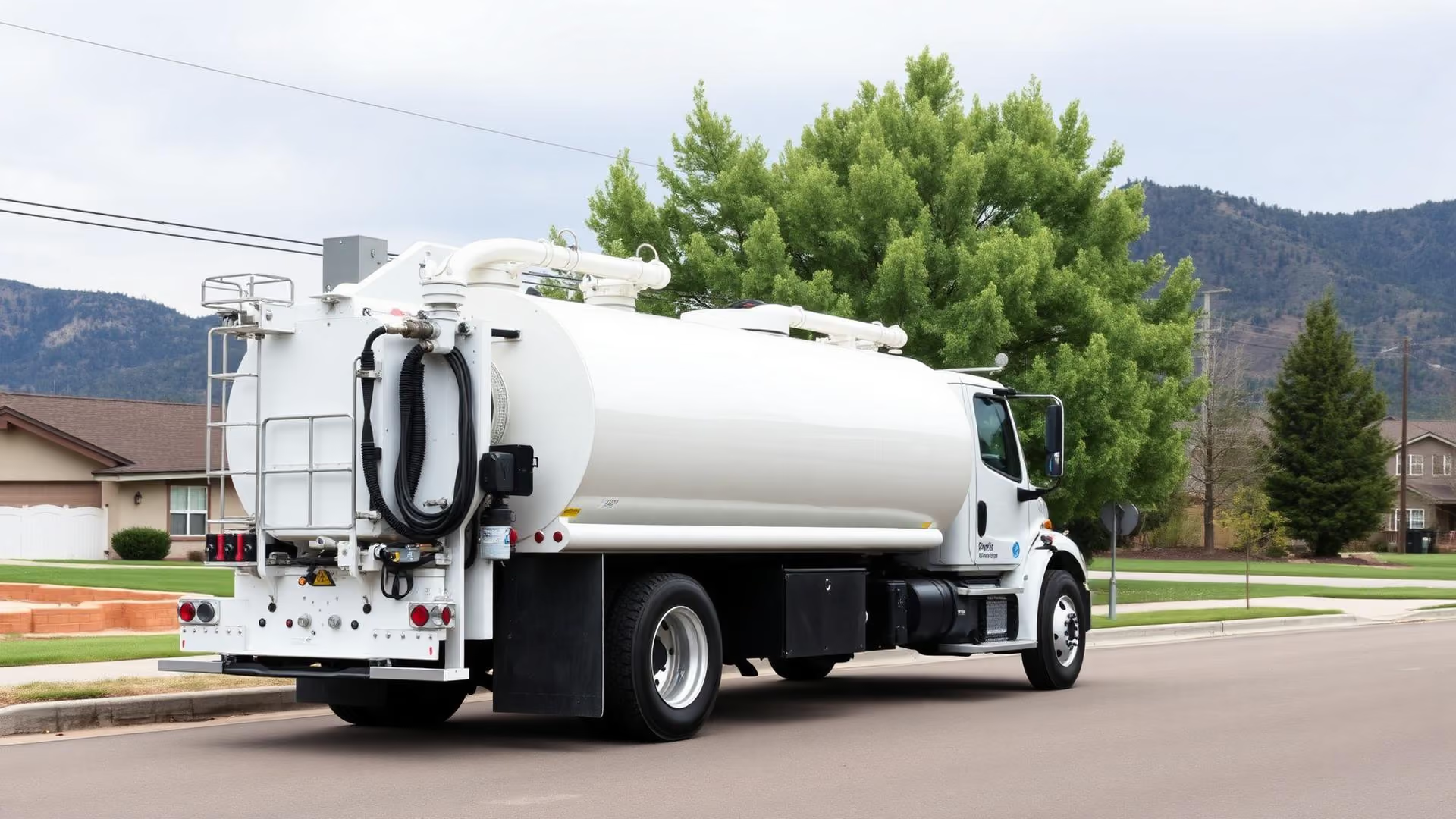
Grease trap cleaning removes the grease cap, the wastewater, and the settled solids, and then scrapes the hardened grease off the interior walls, the baffles, and the outlet tee so the trap can separate properly again. Suction alone does not do that. Affordable Septic Pumping cleans traps for restaurants and commercial kitchens across Denver and the Colorado Front Range, before open or after close. Call 720-427-7557.
The situation
The kitchen tells you before the inspector does. Drains slow at the three compartment sink and the prep sinks, floor drains gurgle or hold water, and a sour odor becomes noticeable during quiet hours and right after close. Staff start pouring hot water down the sink to move things along, which is the tell that everybody already knows something is wrong.
The reliable measure is not the symptom, it is the depth. When the grease cap and the settled solids together reach roughly a quarter of the trap's liquid capacity, the clear separation zone in the middle is too small to work and grease starts riding out with the discharge. That is the 25 percent rule, and it is why we measure on every visit instead of servicing on a fixed guess.
Load rate is menu driven. Fryer stations, breakfast service, butchery, and heavy saute programs load a trap fast. How often a Denver restaurant should clean its grease trap covers how to translate your operation into a real interval.
If your kitchen is on an onsite septic system rather than city sewer, the trap matters even more, because grease that gets past it goes into a drain field. Commercial and restaurant septic covers that combination.
How the job runs
Before open, after close, or on a dark day. The trap sits in the working part of the kitchen and this job does not belong in a rush.
Lid off, and the grease cap and solids depth are measured against the trap's liquid capacity. That number is the record of whether your current interval is holding.
The hardened cap on top comes off first. Trying to pull it through the liquid without addressing it directly leaves most of it behind.
Everything comes out, including the settled solids at the bottom that a top skim never touches.
Walls, floor, baffles, inlet, and outlet tee get physically scraped. Hardened grease bonds to these surfaces and suction does not lift it. This step is what makes it a cleaning.
Baffles present and intact, outlet tee sound, lid and gasket sealing. Missing baffles are common in older units and they defeat separation entirely, so you get told before it becomes a violation.
Lid sealed, contents transported to an approved facility, and a service record issued for your file with the date, volume, and disposal destination.
The scope is fixed so you can compare quotes honestly. If another bid is cheaper, check which of these it drops.
It depends on your interval. A high volume kitchen serviced frequently can run pumping visits between periodic full cleanings, because grease does not have long enough between visits to harden badly on the surfaces.
A kitchen on a longer interval should get a full cleaning every time. More time between visits means more hardened buildup on the walls and baffles, and pumping alone leaves all of it in place, so the effective capacity of the trap shrinks visit after visit even though it looks empty when the truck pulls away.
The comparison table above lays the two scopes side by side, and our grease trap services hub covers how the pieces fit together. If you would rather not manage the decision at all, our restaurant grease trap program puts it on a standing schedule.
Grease leaves the trap. That is the whole failure and everything else follows from it. Once fats, oils, and grease pass the outlet, they cool in your building's drain line and in the sewer lateral, harden onto the pipe wall, and narrow it. The result is a blocked line during service, which is a plumbing emergency with a full dining room attached to it.
Discharging grease past a trap is also a compliance issue. Local health departments and wastewater authorities set the requirements and the enforcement, and a missing or thin service history is what turns an inspection into a problem. Confirm what your jurisdiction requires directly with them.
The trap itself degrades too. Long periods running full leave deposits that stop responding to routine cleaning, and at that point the unit needs replacement rather than service. That is a shutdown and a construction job instead of a two hour visit outside business hours.
Interior kitchen plumbing is a different trade. A blocked drain line inside the building, a failed floor drain, or fixture work is plumbing, and our sister company Afford-A-Rooter Plumbing handles that lane. Replacing damaged baffles, a failed lid, or a cracked tee is quoted separately from the cleaning once we have reported the condition. We do not run enzyme or bacteria dosing programs, because they do not remove accumulated grease and several of them emulsify it so it passes the trap entirely. Compliance filings and fees imposed directly by your authority are yours to submit, though we supply the service documentation they ask for.
Why us
What it costs
Trap capacity, how full it is when we arrive, whether it is a small under sink unit or a large in ground interceptor, how accessible the lid is, whether the visit falls outside normal hours, and the drive to your location. Standing schedule accounts price differently from one off emergency calls, partly because a trap that never gets past the 25 percent point is faster to clean. A trap that has been ignored for a long time takes longer and costs more, which is the practical argument for the schedule. Call 720-427-7557 with your trap size, your menu type, and your service window and we will quote it properly.
Questions
Keep going
Scheduled evacuation that keeps you under the 25 percent line.
Learn more about Grease Trap PumpingSizing, replacement, and code aware interceptor setup.
Learn more about Grease Trap InstallationScheduled intervals, documentation, and after hours visits.
Learn more about Restaurant Grease Trap ServiceGuides on service frequency, the 25 percent rule, and grease compliance.
Family Owned & Operated. Call 720-427-7557 and tell us your trap size and your service hours.