This guide is part of Septic Problems and Diagnostics. For the service itself, see our full range of septic services.
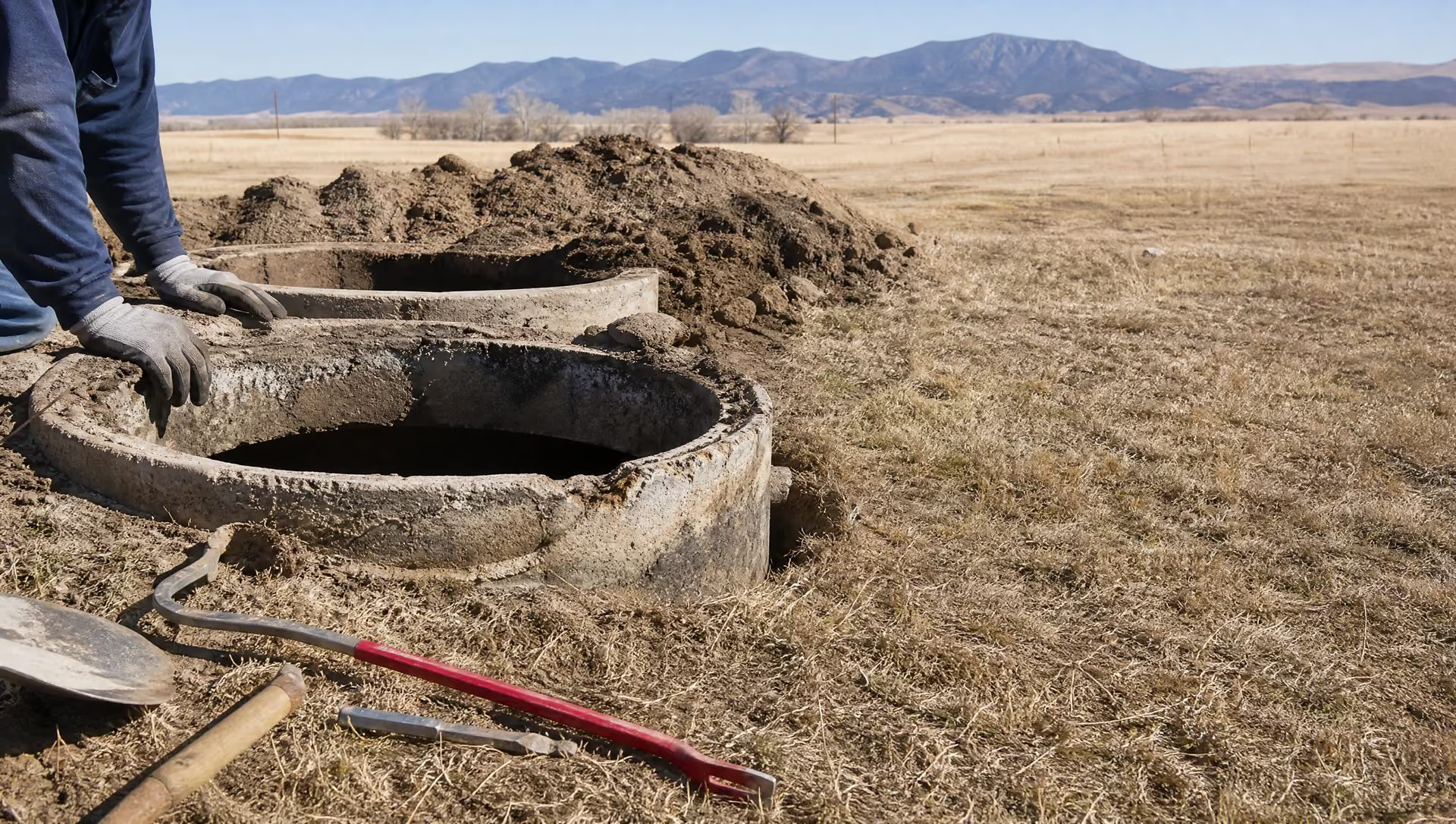
The difference between septic repair and replacement usually comes down to what part of the system has failed and whether that problem can be corrected without rebuilding major system components. In Colorado, smaller component failures can often stay in the repair category, while tank failure, soil treatment area failure, or multiple major components needing work can push the project into replacement territory.
Soil treatment area The soil treatment area, often called the drain field, is the part of the septic system where effluent leaving the tank is dispersed into and treated by the soil.
When the soil treatment area stops accepting and treating wastewater properly, the decision usually moves out of the repair lane and toward replacement or a redesigned treatment approach.
If you are dealing with an active system issue, you can review our septic system repair page here.
What is the simplest way to tell repair from replacement?
A septic repair usually fixes one limited component or one contained problem. A replacement usually means a major system element has failed or aged out to the point that correction requires a new tank, a new soil treatment area, or a broader redesign.
That boundary matters because the scope, permit path, and budget can change quickly once the job moves out of the repair lane.
| Situation | More likely category | Why | What still needs confirmation |
|---|---|---|---|
| Damaged lid, filter, or baffle | Repair | The issue is limited to one accessible component | Whether there are hidden related problems |
| Broken pump or control component | Repair | A defined mechanical part can often be replaced | Whether other system stress is present |
| Damaged line between the house and tank | Repair | The failure may be limited to one line section | Whether the tank or field is also affected |
| Failed tank or structurally unsound tank | Replacement | The tank is a major component essential to system function | Whether other parts also need redesign |
| Failing soil treatment area or drain field | Replacement or major repair | Wastewater is no longer being treated and dispersed properly | Whether a new field, redesign, or alternate technology is needed |
The clearest signal is whether the problem is isolated or whether it affects the system’s core treatment and dispersal function.
When is a septic problem usually still repairable?
A septic problem is usually still repairable when the issue is tied to a specific part and the rest of the system remains structurally sound. That can include lids, baffles, filters, pumps, floats, alarms, some line sections, or limited access-related problems.
Repair makes the most sense when fixing the failing part restores normal function without needing to rebuild the tank or soil treatment area.
When does the situation start to look like replacement instead?
It starts to look like replacement when the tank itself is failing, the drain field or soil treatment area is no longer functioning properly, or multiple major components have reached the point where patching them no longer makes practical or financial sense. In those situations, the project often crosses from fixing a part into rebuilding how the system treats or disperses wastewater. Our drain field replacement page covers what that work involves.
This is especially important when surfacing effluent, persistent wet areas, or repeated failure continues even after routine maintenance and limited repairs.
Does a failing drain field usually mean replacement?
In many cases, yes. Once the soil treatment area is truly clogged or failing, pumping the tank may provide only temporary relief and does not restore the field itself. North Carolina State Extension says that after a soil drain field becomes completely clogged, pumping will only provide a few days of relief and it is usually necessary to install a new drain field, an advanced pretreatment unit, or both.
That is one of the clearest examples of where a homeowner may think “repair,” but the system condition has already moved into replacement-level decision-making.
Does age matter when deciding between repair and replacement?
Yes, but age should be treated as context rather than the only deciding factor. Nebraska Extension says a properly designed, installed, and maintained septic system may operate for 20 to 40 years or more, while Ohio State notes that older systems around 20 to 30 years old may be undersized for current use or have deteriorated components.
An older system is not automatically a replacement case. But when age combines with structural failure, repeated symptoms, or outdated design, replacement becomes more likely. If a system is being taken out of service entirely, our septic tank abandonment page explains how that is handled.
Use this checklist before deciding whether you are facing repair or replacement:
- Identify the exact component or area that appears to have failed.
- Ask whether the tank structure is still sound.
- Ask whether the soil treatment area is still functioning properly.
- Confirm whether the issue has returned after recent pumping or prior repairs.
- Ask whether the county will treat the work as minor repair, major repair, or new/replacement construction.
- Compare the repair scope against the cost and expected life of replacement.
If the issue may involve uncertain system layout or access, the appropriate next step is the Affordable Septic Pumping septic system locating and troubleshooting service, which helps map the system and confirm access before moving forward.
How do Colorado permit categories help signal the difference?
Colorado counties regulate OWTS work locally, and the permit category can be a useful clue about whether the job is still a repair or moving toward replacement. Clear Creek County says a minor construction permit covers one major component being installed, replaced, repaired, or upgraded, while a major construction permit applies when two or more major components are involved. Boulder County also separates major repair permits for aging or failing systems from other project categories.
That does not mean permit labels alone decide the answer, but they often reflect the real scope of the work.
When does repair stop making financial sense?
Repair stops making financial sense when you are stacking repeated fixes on top of a system that still has major structural or dispersal problems. That is a budget question as much as a technical one. A smaller repair can be smart when it restores function. It becomes harder to justify when it only buys a little time before replacement.
| Decision factor | Repair tends to make more sense | Replacement tends to make more sense |
|---|---|---|
| Scope of failure | One component or one limited issue | Tank, field, or multiple major components |
| System age and condition | Otherwise sound and reasonably current | Aging, deteriorated, or repeatedly failing |
| Symptom history | New or isolated problem | Recurring odors, backups, or wet areas |
| Budget efficiency | Repair is likely to restore useful life | Repair only delays a larger unavoidable project |
What does this look like in real life?
A realistic example is a homeowner in Westminster with a functioning tank and field but a failed effluent filter housing and a known access point. That is usually still a repair decision because the failure is contained to one part and the rest of the system appears sound.
Another common example is a homeowner in Evergreen who has already pumped the tank, dealt with recurring wet spots, and learned the soil treatment area is no longer accepting effluent properly. That is much more likely to be a replacement or major-repair decision than a simple repair call.
What mistakes do homeowners make with repair vs replacement?
The most common mistake is assuming every septic problem should start with the smallest possible fix even when the symptoms point to a failing field or major structural issue. That can lead to repeated spending without solving the underlying problem.
Another mistake is jumping straight to replacement when the real failure is limited to one identifiable component. In that case, a well-scoped repair may still be the better financial move.
Red flags to watch for
Be cautious if the same symptoms return soon after pumping, if the yard stays wet or smells like sewage, if the tank shows structural deterioration, or if the quote is called a “repair” even though multiple major components are being rebuilt. It is also worth slowing down if nobody has explained whether the soil treatment area is still functional.
A good recommendation should make the boundary between repair and replacement clearer, not blur it.
What is the best next step if you are still unsure?
The best next step is to identify the actual failed component or system area before making a budget decision. That usually means comparing a repair-scope estimate against a replacement-level estimate only after the diagnosis is clear.
Our septic services page sets out every option between routine care and a full replacement.
Final takeaway
In Colorado, septic repair usually means fixing a contained problem, while replacement usually means rebuilding a major system element such as the tank or soil treatment area. The more the issue affects the system’s core treatment and dispersal function, the more likely you are looking at replacement rather than a normal repair.
If you have a confirmed issue and want the repair side evaluated first, start with our septic system repair page. Call the Westminster shop at 720-427-7557 and a family member picks up.