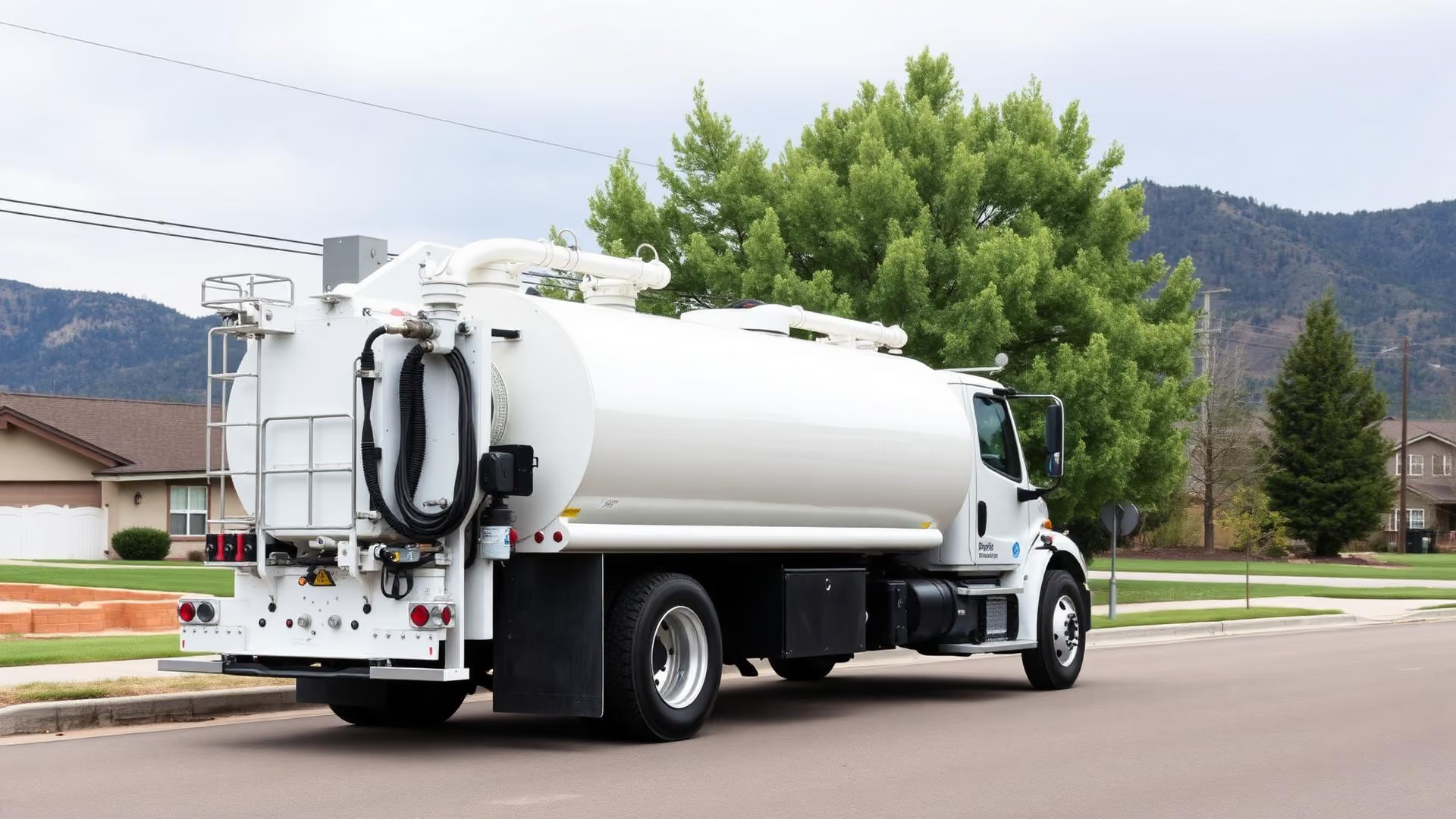
Septic problems
Why are all the drains in my house slow?
Straight answers from a family owned septic company serving Denver and the Colorado Front Range for over 20 years.
Get Your Free Quote!
- Family Owned & Operated
- 20+ Years of Septic Experience
- Serving Denver & the Front Range
- Licensed & Insured
Whole-house slow drains Whole-house slow drains means every fixture in the home is draining slowly at once, rather than a single sink or tub. That pattern points at the shared line, the tank, or the drain field rather than a fixture clog.
One slow fixture is a plumbing issue, but all of them slowing together is usually the septic system telling you it is full or blocked.
When every drain in the house is slow at the same time, the problem is downstream of the fixtures. On a septic property that usually means a full tank, a clog in the main line to the tank, a failed outlet baffle, or a drain field that cannot accept flow. A single slow sink is a fixture clog. Whole house slowness is a system problem. Stop heavy water use and have the tank level checked before it turns into a backup.
What you are seeing
- Tubs, sinks, and toilets all drain slowly
- Gurgling in a tub when a toilet flushes
- Toilets that need a second flush
- Drains get worse after laundry day
What it usually means
Ranked by how often we find each one on Front Range properties.
- 1
Tank is full and overdue for pumping
Most likelySludge and scum reach the outlet, liquid backs toward the house, and every fixture slows together.
- 2
Main line clog between house and tank
CommonWipes, grease, or a belly in the line restrict flow. Nothing past that point drains right.
- 3
Drain field failure
CommonIf the field will not take effluent, the tank stays full and the house drains slowly no matter how often you pump.
- 4
Collapsed or root filled line
PossibleOlder clay or cast lines crack and roots move in, especially on mature Front Range lots.
- 5
Blocked plumbing vent
Less commonWithout air, drains glug and slow even when the tank is fine.
What to do right now
- Stop laundry and dishwasher use immediately.
- Avoid chemical drain cleaners. They damage the bacteria in the tank.
- Check when the tank was last pumped.
- Watch for gurgling, which points to venting or a partial main line clog.
- Call 720-427-7557 for a pump and inspection.
When it is an emergency
Call 720-427-7557 right away if any of these are true.
- Water is rising in a floor drain or shower pan
- Sewage odor is inside the house
- The lowest fixture in the house has already backed up
What the fix typically involves
Pump and measure
We pump the tank first. If drains clear instantly, the tank was the cause. If not, the line or the field is.
Clear the main line
We cable or jet the line between the house and the tank and confirm full flow.
Read the field
Fast liquid return after pumping means the field is the real problem and needs a repair plan.
What drives the cost
We do not post flat prices, because the same symptom can be a filter cleaning or a drain field replacement. These are the factors that set the number on your property. You get the price before we start the work.
- Tank size and how overdue the pump-out is
- Whether line cleaning or camera work is required
- Depth and access to the cleanout or tank lid
- Any repair found at the baffle or outlet
Tell us what your system is doing
Send the details and we will tell you what we think is going on and what it takes to fix it. We serve Denver, Westminster, and the Colorado Front Range.
Get Your Free Quote!
Septic trouble? We answer the phone.
Family owned and operated, serving the Front Range for over 20 years.