This guide is part of Septic Pumping and Maintenance. For the service itself, see our septic tank pumping service in Denver.
The fastest way to find a septic tank lid is to start with records, then trace the home’s main sewer line to the area where the tank is most likely buried. In many cases, the lid can be found without random digging if you use the property paperwork, the plumbing path, and a few visual clues in the right order.
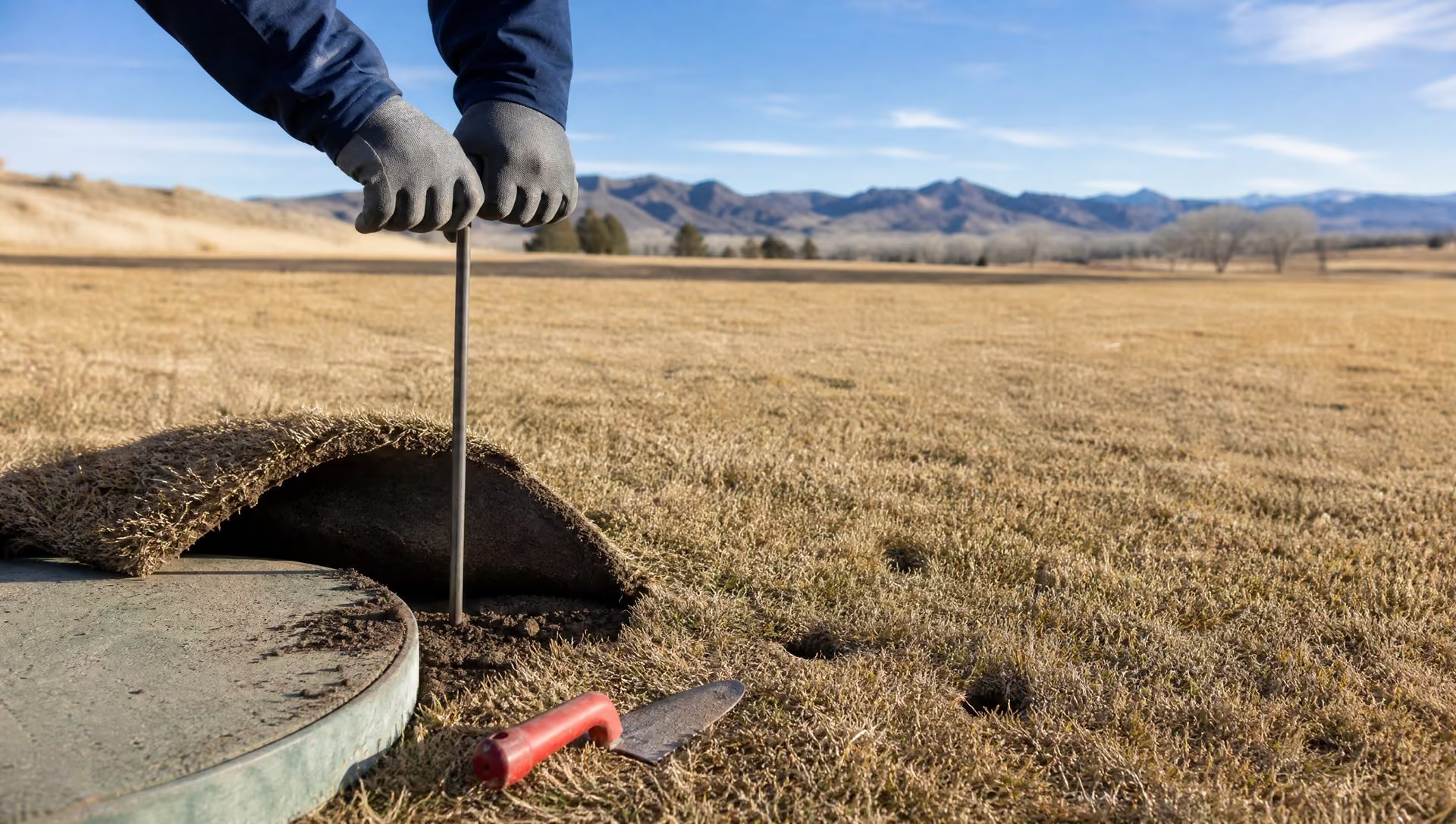
Septic tank lid location. Locating a septic tank lid means narrowing the search with records and the home’s main sewer line direction before looking for ground clues, rather than digging across the yard.
A focused search protects the yard and gets the tank open faster on the next service visit.
If you would rather start with professional locating help, you can review our septic locating and troubleshooting page here.
What is the best first step to find a septic tank lid?
The best first step is to look for the system records before you search the yard. Installation permits, site plans, inspection reports, and past pumping records often show the tank location or at least narrow the search area enough to avoid guesswork.
This is usually faster than probing random parts of the yard. It also reduces the chance of damaging landscaping or wasting time in the wrong area.
| Starting point | Why it helps | What you may find | When it works best |
|---|---|---|---|
| County or local OWTS records | Often the fastest way to narrow the search | Permit drawings, site plans, inspection records | Best when the property has older records on file |
| Past pumping or inspection paperwork | Service notes may describe the tank location | Lid depth, access notes, tank size, risers | Best when the home has documented service history |
| Main sewer line inside the home | Gives the most reliable physical direction | The line where wastewater exits the house | Best when no records are available |
| Visual clues in the yard | Helps confirm a likely area | Slight depressions, raised ground, risers, access lids | Best after records and sewer-line tracing narrow the search |
| Professional locating service | Useful when access is buried or records are unclear | Exact location of the tank and access points | Best when the search is taking too long or the yard is complex |
Colorado counties often keep at least some septic or OWTS records online or through environmental health offices. Douglas County provides a public septic records search, Boulder County publishes septic system data, and our page on Jefferson County septic permits covers the online OWTS document lookup process there.
How do you use the home’s plumbing to narrow down the location?
The main sewer line is usually the best physical clue when records are missing. Start in the basement, crawlspace, or utility area and identify the main drain line that carries wastewater out of the home.
Once you know where that line exits the foundation, move outside and search in that general direction instead of scanning the whole yard. This usually gives you a much smaller and more realistic search zone.
What clues in the yard can point to the septic tank lid?
After you have narrowed the likely area, look for subtle changes in the ground rather than obvious markers. Septic tank lids may sit under slightly raised or settled soil, sparse grass, different snow melt patterns, or visible risers if the system has been updated.
The key is to look for consistent clues, not just one random patch of grass. A likely location usually makes sense in relation to the house plumbing and the surrounding layout.
Should you probe or dig to find the lid?
Light, careful probing in a likely area is sometimes used to confirm the tank location, but random digging across the yard is not the right approach. If you do not have records, the sewer-line path, or a clear search zone, it is usually smarter to stop before turning the yard into guesswork.
The goal is to locate the tank with the least disturbance possible. If the search is becoming invasive, the better next step is usually professional locating help.
Use this checklist before you start searching:
- Check county or local OWTS records first.
- Look for past pumping or inspection paperwork.
- Find where the home’s main sewer line exits the foundation.
- Narrow the search to the likely path outside.
- Look for visual clues like risers, settled soil, or unusual grass patterns.
- Stop before random digging starts damaging the yard.
If the tank location is still unclear after those steps, the appropriate next step is the Affordable Septic Pumping septic system locating and troubleshooting service, which is designed to locate the tank accurately before service.
What should you avoid while searching for a septic tank lid?
Avoid heavy excavation, striking the ground aggressively, or trying to uncover large areas without a clear reason. That can damage the yard and may create safety or utility risks if underground lines or buried components are nearby.
It is also important to avoid treating the lid like a simple utility cover once you find it. Septic tank lids need to stay secure, and open lids should never be left unattended.
Is it safe to open or remove a septic tank lid yourself?
Finding the lid is not the same as opening it. Septic tanks can contain dangerous gases, and unsecured or open lids are a serious safety hazard, especially around children and pets.
If the lid needs to be opened for pumping, inspection, or troubleshooting, it is best handled as part of the service visit. Washington State’s septic safety guidance says open lids should never be left unattended and should be secured after work is complete. If the lid is buried deep, our page on septic tank risers and lids explains how bringing access to grade removes the problem permanently.
When should you stop searching and call for locating help?
You should stop and call for help if the property records are unclear, the yard has multiple likely areas, the access points appear deeply buried, or you are no longer narrowing the search in a logical way. At that point, professional locating is often faster and less disruptive than continuing to guess.
That is especially true on older properties, larger lots, or homes where landscaping changes may have hidden the original access points.
| Situation | Best next step | Why | What to avoid |
|---|---|---|---|
| You have records and a clear sewer-line direction | Continue with a focused search | The likely area is already narrowed | Random digging in unrelated parts of the yard |
| You have no records but the sewer line is clear | Search visually and carefully in that zone | The plumbing path still gives you a logical start | Tearing up the yard without confirming the path |
| The lot is large or heavily landscaped | Call for locating help | Hidden lids and altered grading make guessing less reliable | Expanding the search until it becomes disruptive |
| The lid appears damaged, loose, or unsafe | Stop and get professional help | Safety matters more than access speed | Trying to force or remove the lid yourself |
What does this look like in real life?
A realistic example is a homeowner in Golden who needs the tank pumped but has never seen the lids. The fastest path is to check county records, find the sewer line where it exits the basement wall, and narrow the search to that side of the yard before anyone starts probing the lawn.
Another common example is a homeowner in Evergreen who finds an old service invoice but the yard has been regraded and landscaped since then. In that case, the paperwork helps, but a locating visit is often the cleaner solution because the original access points may be buried deeper than expected.
What mistakes do homeowners make when trying to find the lid?
The most common mistake is skipping the records step and going straight to digging. That usually creates more yard damage and still does not guarantee the tank will be found quickly.
Another mistake is assuming that once the lid is found, it is safe to open or handle like any other outdoor cover. Septic lids need to remain secure, and the tank environment itself is hazardous.
Red flags to watch for
Be cautious if the yard search has turned into trial-and-error digging, if the likely area is near buried utilities, or if the lid appears cracked, loose, or unstable. It is also worth stopping if the property has no records and the sewer-line path is still uncertain.
A smart search should get more focused as you go, not more destructive.
What is the best next step once you locate the lid?
Once the lid is located, the best next step is to use that location to make service easier in the future. Document the spot, note the distance from fixed landmarks, and keep a simple property sketch so the next pumping or inspection visit starts with less guesswork.
Finding the lid is step one, and our septic services page covers everything that follows it.
Final takeaway
The best way to find a septic tank lid without tearing up the yard is to start with records, use the home’s sewer line to narrow the search, and stop before guesswork turns into excavation. A focused search usually saves time, protects the yard, and makes the next service visit much easier.
If you want help locating the tank and its access points, call Affordable Septic Pumping at 720-427-7557. Family run from Westminster, working across Denver and the Colorado Front Range.